
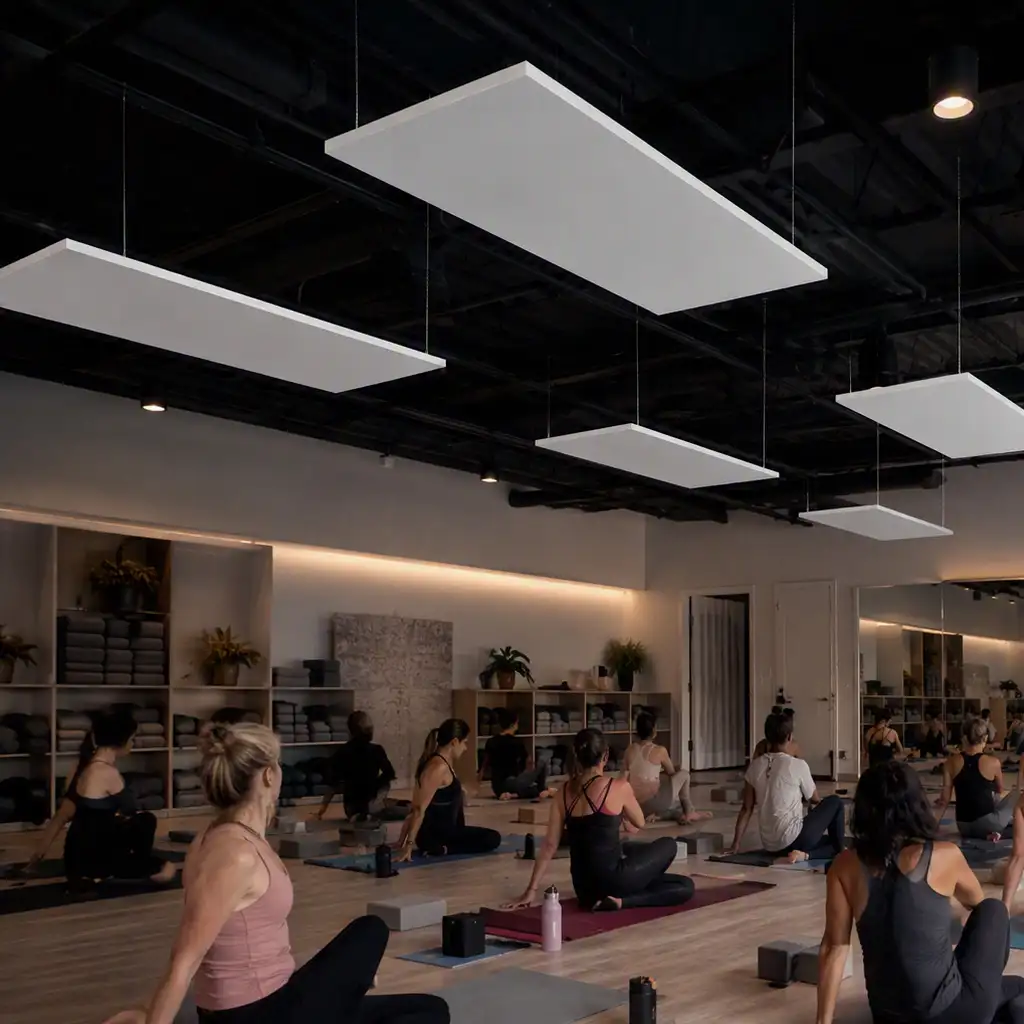
Traditional studio heating warms the air first, and hopes that warm air eventually reaches the people practicing in it. Far-infrared heat skips that step entirely. Radiant wavelengths between roughly 4 and 14 microns pass through the air largely unabsorbed and are instead absorbed by skin, muscle and tissue the moment they make contact — the same way sunlight warms your skin on a cool day even though the air temperature hasn't changed.
This is why a hot yoga room heated with Yandiya-Heat panels can feel deeply warm at a lower thermostat reading than a forced-air room. The heat isn't wasted heating empty air near the ceiling or escaping through door gaps — it's delivered directly to the bodies on the mats below.
Because the warmth penetrates a few millimetres into tissue rather than sitting on the surface, students often report that far-infrared heat helps muscles loosen more quickly at the start of class, supporting deeper stretches earlier in a vinyasa or hot yoga sequence.
There's also a physiological angle: radiant heat encourages a more even, gradual sweat response compared to the humid, oxygen-thin air common in traditional hot rooms, which is one reason so many studio owners describe the switch as making classes feel more comfortable, not just warmer.
Every Yandiya panel is engineered to emit within this optimal far-infrared band, tested and certified to CE, UKCA and IEC standards, so studios can deliver this effect consistently, class after class, for years.